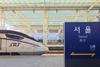

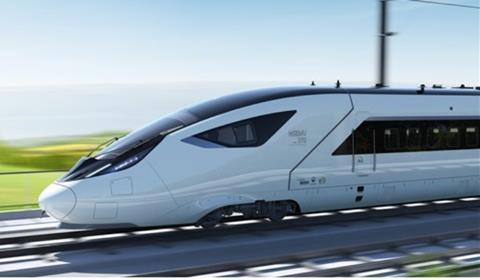
SOUTH KOREA: The development of the technologies required for a high speed trainset with a commercial speed of 370 km/h has been completed as part of a 22·5bn won national research and development programme.
The project to develop the vehicle branded EMU-370 started in April 2022 and its completion was announced by the Ministry of Land, Infrastructure and Transport on December 22. The programme was led by Korea Railroad Research Institute. Six more state-owned and private companies participated including Hyundai Rotem, train vehicle control system specialist Intercon Systems, and national operator Korail. Funding worth 18bn won was provided by the national government, and 4·5bn won by the private sector.
The EMU-370 is designed to reach a maximum speed of 407 km/h, but the project partners have indicated that the train would be limited to 370 km/h in commercial operations.
The ministry is to order two eight-car EMU-370 trainsets in the first half of 2026 for use by Korail, with production to start by the end of the year. Test runs are scheduled to commence in 2030, and commercial operations from 2031.
The ministry has said the train design is aimed at both domestic applications and exports, and that it would become the fastest train in operational use in the world after China’s CR450.
Improved power, air resistance and soundproofing
KRRI and its partners have been developing various high speed rolling stock technologies over the past two decades, although the country’s first dedicated high speed fleet, branded KTX, was derived from France’s TGV technology. The research efforts have led to the development of several prototypes aimed at various applications where a maximum speed of at least 250 km/h is needed.
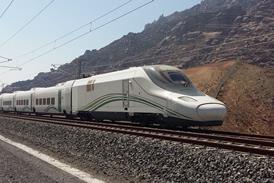
The EMU-370 follows on from the EMU-320 design, which was in turn derived from the earlier HEMU-430X prototype. Hyundai Rotem is supplying EMU-320 trainsets for both Korail and Supreme Railways.
The EMU-370 trainsets are to feature traction motors rated at 560 kW power motors, compared to the 380 kW rating for those used in the EMU-320 fleet, and the designers claim that air resistance has been reduced by a further 12·3% overall. This is primarily being achieved through the development of an improved nose design and the application of a lightweight bogie concept.
Improved underframe and damper components have also been adopted, which are intended to deliver a better dynamic performance and ride comfort. The EMU-370 is to feature significantly improved soundproofing compared to the EMU-320. One eight-car trainset will be 200·1 m long and have 479 seats.