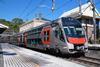
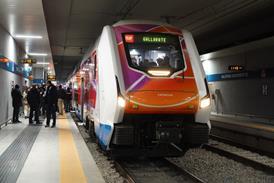
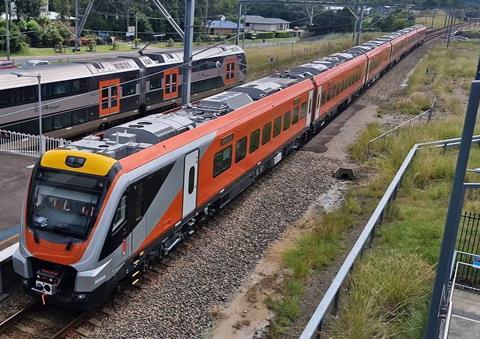
AUSTRALIA: Test running has started on the New South Wales network with the first batch of 29 Civity electro-diesel multiple-units built by the Momentum Trains consortium of CAF, Pacific Partnership and DIF Infrastructure V.
The 160 km/h regional and inter-city multiple-units consist of 117 cars in different configurations. Transport for New South Wales says it is the first Australian passenger train designed to use both overhead electric and diesel traction.
The A$2·8bn contract was signed in February 2019 and includes capital costs of A$1·26bn and 15 years of maintenance. CAF’s share of the contract is €500m, and the Spanish manufacturer is also providing equity financing and two driver training simulators.
The availability-based PPP contract includes design, manufacturing, financing and maintaining the fleet, as well as the construction of a new maintenance facility at Dubbo, 300 km northwest of Sydney, where final assembly is taking place. Entry to service was originally planned from 2023.
The vehicles feature overhead luggage storage, seat pockets, charging ports for mobile devices and tray tables suitable for laptops. They are also equipped with accessible toilets, wide doors, priority seating and accessible help points.
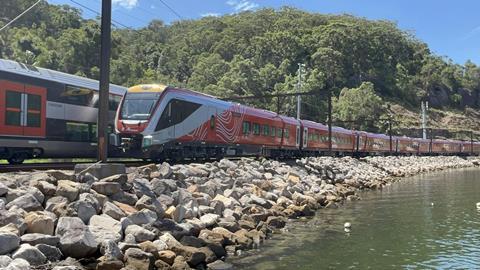
They feature audio-visual passenger information systems, CCTV cameras, and automatic selective door operation for stations with short platforms. The long and short regional trains also feature a buffet car.
The vehicles are now undertaking tests to complete the safety accreditation process mananged by the Office of National Rail Safety Regulator.
Regional and inter-city
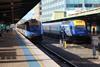
Operator NSW TrainLink is to use 10 long and nine shorter regional trains to replace the XPT diesel trainsets built by Comeng and the Xplorer and Endeavour DMUs built by ABB Transportation. The batch of 10 longer trains are intended to be used on the long-distance routes linking Sydney, Melbourne and Brisbane.
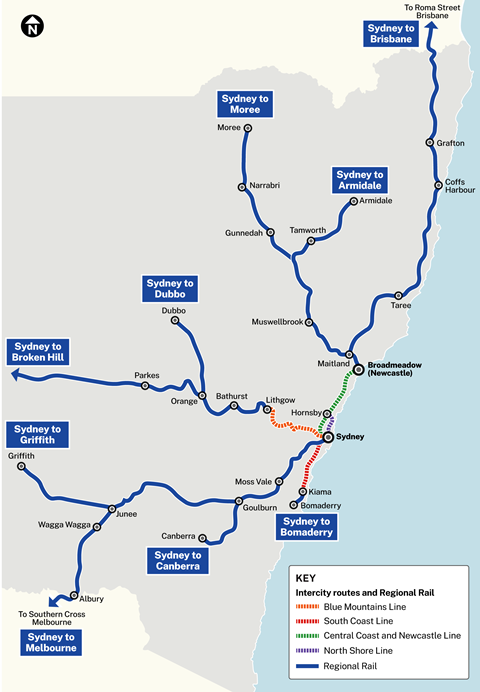
Infrastructure works are also to be carried out to accommodate the vehicles. These include works at platforms and stabling yards, including the provision of infrastructure for power, water supply, tanking, cleaning and refuelling.