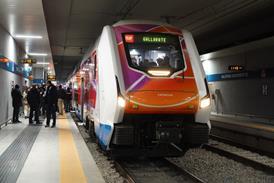









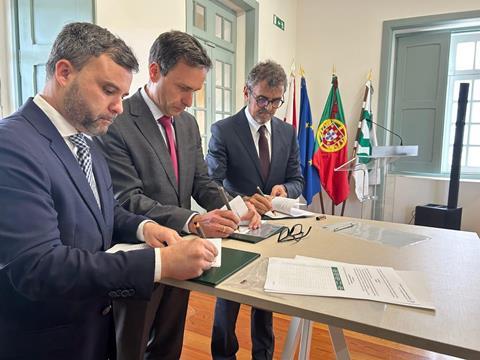
PORTUGAL: National train operator Comboios de Portugal has exercised an €318m option for a consortium of Alstom and its local partner DST to supply a further 36 Adessia Stream suburban electric multiple-units. The parties have also agreed an accelerated delivery plan in response to growing passenger demand and the need to modernise existing rolling stock.
The latest firm order signed on March 10 means that 153 EMUs have now been ordered under an October 2025 framework agreement, which Alstom said is the largest rolling stock acquisition in Portugal’s history.
The €1·064bn order now includes 98 three-car suburban trains for use around Porto, Lisboa and on the 25 km Cascais Line from Lisboa to the coastal town of Cascais, plus 55 trains for regional routes. The first are scheduled to enter service in 2029 and the last in 2031, ahead of the orginally planned date of 2033.
Alstom said the EMUs would be designed specifically for the Portuguese network, offering improved comfort, accessibility and onboard wi-fi connectivity with a capacity of up to 450 passengers. Feedback has been sought from Accessible Portugal, and features will include step-free access a level floor throughout and dedicated spaces for wheelchair users and bicycles.
Portuguese factory
As part of the contract, Alstom is to work with DST to establish a 20 000 m² train manufacturing facility equipped with modern production technologies at Matosinhos near Porto.
This aims to both support the EMU project and contribute to the long-term development of skills and employment in Portugal. This factory is expected to create close to 300 direct jobs including in engineering, technical and skilled trades roles, with 15% of positions being reserved for young unemployed people, the long-term unemployed and people with health conditions or disabilities.
‘This project supports CP’s vision to deliver more reliable and accessible rail services for passengers while preparing the network for future demand’, said David Torres, Managing Director of Alstom Portugal. ‘This partnership will also deliver long-term impact by strengthening local capabilities, creating new employment opportunities and contributing to the sustainable development of Portugal’s railway sector.’