UK: Rail reform offers an opportunity to boost industry revenues by leveraging private sector marketing expertise and innovation to fill empty train seats, Anthony Smith, CEO of the Independent Rail Retailers association, tells Rail Business UK.
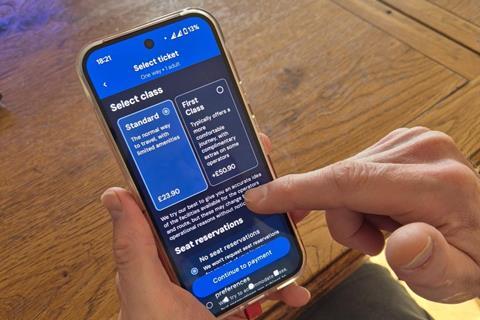
Independent train ticket retailers are ‘a force for good’ bringing competition, private financing and innovation to the market, and this has been recognised in the government’s consultation on the future of the rail industry, says Anthony Smith, CEO of the Independent Rail Retailers trade association.

IRR represents 10 companies selling tickets in Great Britain, and Smith says its members do three things. Most visibly, they sell ‘about 90% of online ticket sales in Great Britain. That’s quite a few billion pounds, quite a big slug of money’, with almost all being ‘passed straight back to government’ which now collects ticket revenue. A retailer now gets 4·5% commission on sales, down from 5% since April 1 this year.
IRR’s members also provide travel management services for businesses and organisations such as charities and football clubs. This ‘helps them choose rail, helps them with their green credentials and helps them get the best value for money’.
Less visibly, IRR members provide the train operating companies’ websites and apps. ‘The only operator our members don’t do is LNER, which through a quirk of history is actually owned by LNER’, says Smith.
| Independent Rail Retailers members |
|---|
| Assertis |
| Atomised |
| Evolvi |
| Fast Rail Ticketing |
| My Train Ticket |
| Omio |
| OnTrack |
| Raileasy |
| Trainline |
| Trip.com Group |
‘A delicate market’
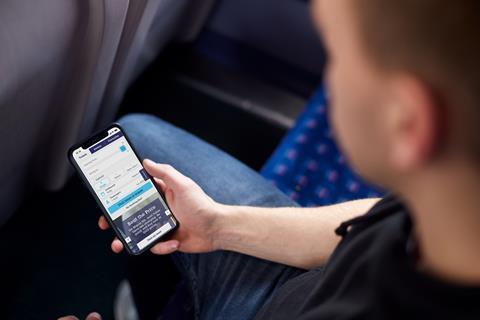
With major reform of the rail sector underway, Smith says IRR’s job is to make sure that government and other stakeholders are aware of the importance of the third-party retailing sector and ‘the pitfalls of inadvertently getting this segment wrong, because it’s quite a delicate market’.
Smith said the government’s recent A Railway Fit for Britain’s Future consultation was a positive development. ’What’s really good is that the consultation did recognise the role of third-party retailers in adding significant value to the rail marketplace and playing a fundamental role in driving innovation and attracting more customers to the railway.’
He says that as private sector companies, IRR’s members are ‘perfectly incentivised to drive growth and keep costs under control’, and at a time when the rail industry’s costs are under close scrutiny ‘there’s no Treasury money at stake, it all comes from the private sector.’
Independent retailers bring competition, and ‘if you don’t like one, you can go and choose another’. The companies ‘have got every interest in people coming back and buying more from them, so see themselves as a kind of trusted consumer champion’.
Smith says retailers ‘do a very good job in ferreting out the best deals for customers on things like split ticketing’. The quirks of the National Rail ticketing system mean that by breaking a trip into separately tickets sections ‘you can often achieve quite spectacular savings on the published price’ of a through ticket.
For many consumers rail ticketing ‘can be a bit daunting at times’, and ’when you do an unusual journey and want a bit of advice, you want a trusted provider’.
Trends in ticketing
IRR is seeing two major trends in ticketing.
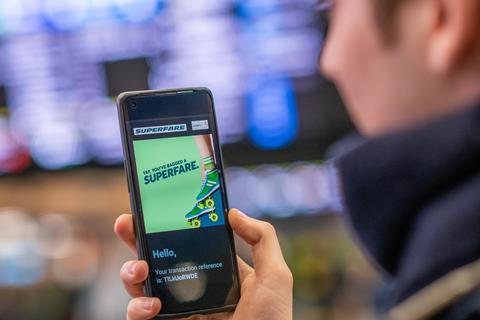
The first is the continuing shift of sales to online channels and apps. ‘People increasingly want the kind of mobility functionality that our members can provide’, says Smith. ‘It makes buying very easy, and the online environment allows for clarity about what you’re buying and what restrictions are attached.’
He believes apps will increasingly dominate travel payment. ’It puts people in control. You can provide really good levels of information. You can be in contact with them during the journey. We do virtually everything else through our phones. So let’s just have one last push and get ticketing on mobile.’
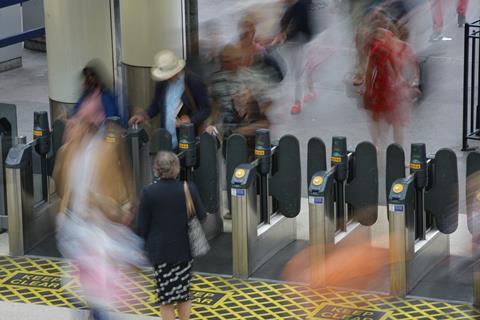
The second trend is the increase in pay-as-you-go products, with London’s system extending to more stations in southeast England, and Greater Manchester and the West Midlands developing their own zonal capped PAYG products.
Smith says that politicians’ frequent calls to implement a ‘London-style’ PAYG system elsewhere in the country are understandable, but technology has changed and there’s a chance now to ‘jump ahead’ to mobile pay-as-you-go without needing equipment such as ticket gates.
‘The technology is there, and we would like to get on with it’, says Smith. ‘There are some exciting opportunities coming up if people are willing seize the opportunity and to work with the private sector.’
He points to the success of barcode ticketing, saying much of this ‘was brought in through private sector money through our members’.
However, Smith cautions that the simplicity of PAYG ‘can mask the fact that some of the distances and some of the amounts of money involved are getting relatively large’; London’s PAYG system now extends to Reading, which is ‘is quite a long way’ from the heart of the capital. Rail Business UK understand that some combinations of journeys in the extended London contactless PAYG area can generate daily charges of around £80.
Smith says it is important to be aware of market elasticity, and to ensure that a desire for simplicity does not sacrifice the ability to tempt people with more tailored fares, for example to attract family outings as well as solo travellers.
‘Passengers are not a homogenous bunch. They have different attitudes to value for money, about what they want to buy. Choice will help drive more people to the railway, not false simplicity which looks very attractive on the surface but underneath actually results in prices going up.’
PAYG is unlikely to be suitable for long-distance travel, says Smith, as ‘the variation in prices between an Anytime return and an Off-Peak single is absolutely huge, and I don’t think people would have the confidence to tap in and tap out without knowing beforehand exactly what they’re going to be paying.’
The devil is in the implementation
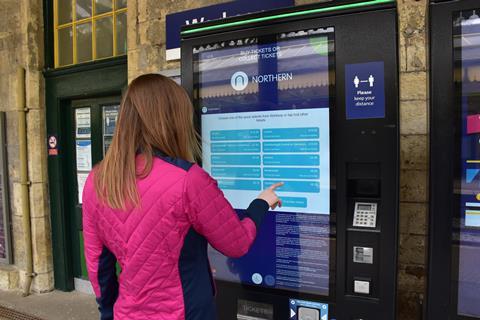
Smith says IRR’s members ‘were reasonably pleased’, with the government’s recent consultation on the future structure of the rail industry, which is ‘heading in the right direction.’
He says ‘we now know that Great British Railways is going to be retailing tickets, and it’s going to have an online function in addition to stations.
‘But of course, the devil is always in the detail, and then the devil is increasingly in the how the details are implemented day to day.’
The consultation ‘posed some questions around how to ensure that GBR competes on equal terms with third party retailers when it starts selling its own tickets’. IRR says it is important that the future market is fair and transparent, avoiding ‘hidden subsidies through the back door, either in terms of unfair marketing or preferential products which only GBR can sell.’
IRR wants GBR’s retail activities to be ‘very much a standalone function within the GBR group’, with no cross-subsidy and ‘parity of access for all retailers, so everyone, public and private, is treated the same’.
IRR believes that GBR should not be the body that licenses retailers in the future. ’There has got to be an independent body. And the obvious place to put that is with the Office of Rail & Road, which already exists and has some functions like this. We are lobbying hard for there to be an independent licensing function.’
At the moment, licensing is done by the Rail Delivery Group, ‘which is odd because its members are competitors’. This ‘is just the way it’s grown up over the years’, but with industry reform ’we have a chance to have a clean sweep and tidy some of this stuff up’.
The ticketing system has evolved since privatisation by ‘adding more and more to the current system’, and Smith says ’nobody has ever stopped and thought, how can we do this better? So there is a great opportunity.’
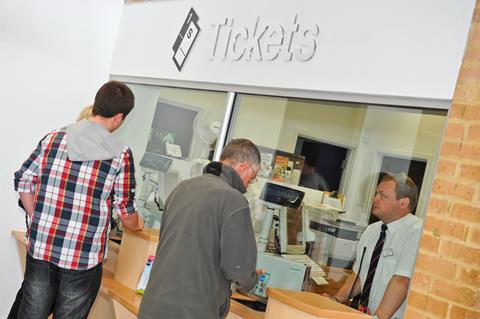
As for GBR’s own future ticket retailing platform, Smith says ’I hope that they don’t try and build it themselves, because it could get quite complex and expensive’.
He believed that ‘we’ve already got a whole set of other ticketing platforms which work and which consumers trust. I hope they will keep the private sector engaged in that. There are plenty of people with the tech and very good journey planning tools and great algorithms already sorted out. So deploy that skill and knowledge.’
Doing it better
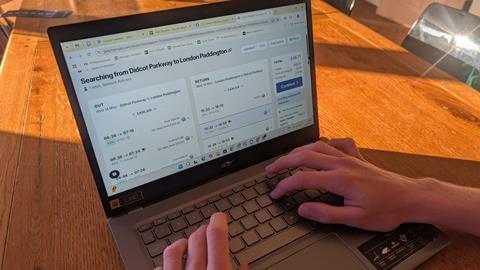
Setting up GBR is expected to take at least two years, and ’in the meantime, there’s plenty of potential to be going on with other stuff, and that’s what our members would like to do’.
In particular, IRR members would like to be able to retail all ticketing products, including PAYG.
’There are some Train Operating Company only products our members can’t sell, which seems a bit curious’, says Smith. ‘If you made a tin of beans, you would want it in the biggest supermarket possible, so many people can get it.’
This is also an opportunity for ’a fresh think’ about how ticketing information is stored and is released to the industry.
Smith believes rail should be marketed ‘in a much more customer friendly way and a much more normal retail kind of way. Our members are really keen to do that, but they need a better fares database so they can do this more effectively.’
He says the current systems are structured ‘on the basis that somebody knows they want to go to Edinburgh at 12.00 on Sunday, and they’re given a range of options around that. What IRR would like to see is what you see in the airline and hotel business, where you can push out deals to people and say, “come to Edinburgh for £20 in the next two weeks”. And attract people to rail, sell rail rather than just retailing it.’
Smith believes with the private sector retailers ‘could prove very beneficial’ for the industry as a whole, because it is hard to reduce many of the rail sector’s fixed costs, ’but income can be boosted, if you market things in the correct way’.
He says ‘any extra pound that comes in is very welcome. And if that pound has been brought in by a retailer who only keeps 4·5% of that of that pound as their commission to cover absolutely everything, that is astonishingly good value.’
IRR is ‘keeping a very close eye’ on rail reform plans to ensure the industry does not lose the marketing expertise that has been built up. ‘One fare suits one passenger, it may not suit another passenger’, says Smith, and IRR’s members have ‘a massive pool of data about people’s buying habits, their propensity to buy more, what deals people respond to’.
He believes ‘there is real potential for the whole industry to be able to grow. Ticketing trends are quite stark at the moment: people are very conscious of price; they are trading down from first class; they are increasingly buying advance purchase deals. But they can be up-sold premium products such as first class. You can try and attract people, but it has got to be a sales job. It’s not going to be a simple retail job, you’ve got to have quite a different mentality’.
Smith says with rail reform ‘we are at a real crossroads. It’s an opportunity to get this right’, with Great British Railways focused on running trains and the private sector providing ‘a real customer focus’ so GBR can ‘really benefit from information and innovation and competition, all provided by the private sector, to fill empty seats and grow revenue.’
Smith says ’it’s really about driving growth. We are entering a period where the railways are going through quite profound change. I think investment is going to get harder to justify for a variety of reasons. And therefore there is a need to keep costs under control and drive growth. And of course, it helps save the planet at the same time.
‘Making rail more attractive, value for money and easy to access is good for everybody.’