






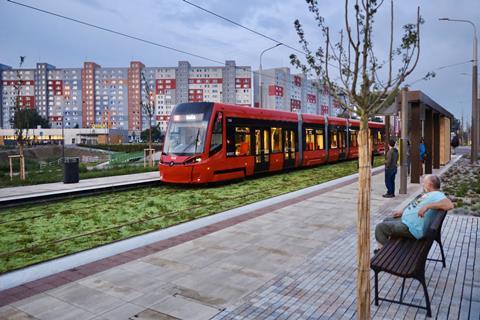
SLOVAKIA: A 6·9 km extension of the Bratislava tram network from Jungmannova to Južné Mesto in the suburb of Petržalka on the south side of the River Danube opened on July 27.
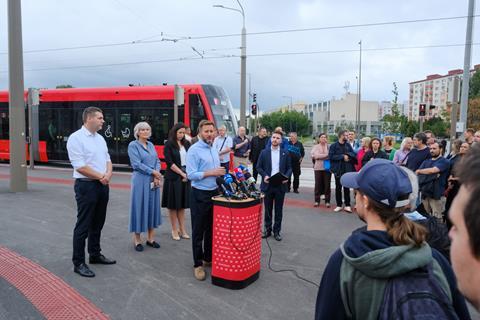
‘The launch of the new tram line to Petržalka is a big event not only for the people of Petržalka, but for our entire city’, Mayor Matúš Vallo said during the opening ceremony.
Route 3 services run every 5 min on weekdays, and every 2½ min in the morning peak.
Construction challenges overcome
Construction of the six-stop extension began in 2021, but the project was affected by Covid-19, increases in energy and material prices and discovery of an anti-tank wall and munitions from World War II.
‘Everyone who has been following this project from the beginning knows that we had to deal with several problems’, said Vallo. ‘The Petržalka tram is now a reality and, together with new public spaces, roads, pavements and a new cycle path, will fundamentally improve the quality of life of the residents of our largest housing estate.’
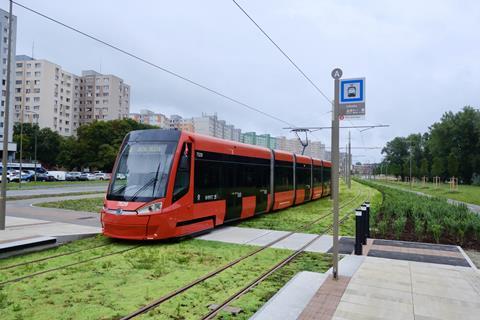
The extension is largely on grass tracks. There is 6 km of segregated cycle path along the route, and 1 512 trees and 7 046 m² of shrubs were planted.
Funding came from the national government (€8·6m) and the European Union (€73m).
The future of urban mobility
Governor of the Bratislava Region Juraj Droba said ‘we are currently facing a significant predominance of individual transport; almost three-quarters of people travel by car. Our strategic goal is to motivate drivers to use other modes of transport and achieve a 50:50 ratio between public and individual transport. That is why we have prepared the Sustainable Mobility Plan for the Bratislava region, in which projects such as the Petržalka tram are key pillars.’
Minister of Transport Jozef Ráž said ‘we are convinced that rail transport is the future of urban mobility — that is why we are also financing the modernisation of other tram lines, the purchase of trams and trolleybuses, as well as the renovation of the infrastructure at the Krasňany depot and in Jurajov dvor. Bratislava has the tools and support to become a leader in sustainable urban mobility.’