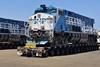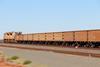







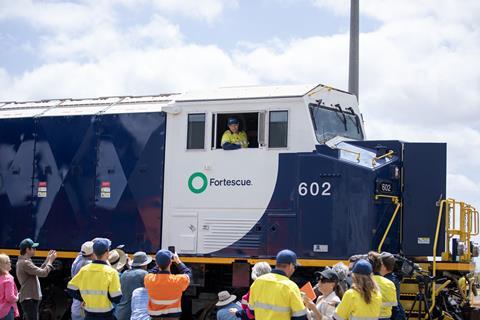
AUSTRALIA: Iron ore miner Fortescue has begun commissioning two Progress Rail battery locomotives which it says house the world’s largest land-mobile batteries each with a capacity of 14·5 MWh.
Each eight-axle BE14.5BB locos are capable of providing 1 100 kN of tractive effort, which the manufacturer says makes them the most powerful battery locos to be produced.
They are designed to offer full functionality in main line use, operating in all configurations used by Fortescue including in hybrid mode in combination with diesel-electric locomotives.
They will be charged through two 2·8 MW pantographs using renewable electricity from Fortescue’s Pilbara Energy Connect network. They will also recover between 40% and 60% of the energy used through regenerative braking.
Heavy haul without fossil fuel
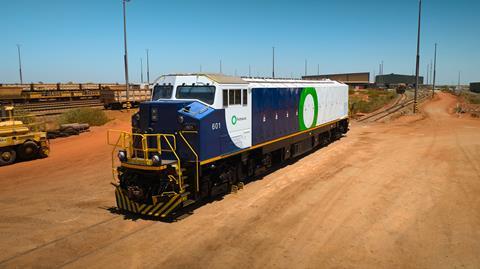
The locomotives were ordered in January 2022 as part of Fortescue’s wider plan to lower its carbon footprint to achieve ‘real zero’ operational emissions by 2030. They are expected to eliminate the consumption of approximately one million litres of diesel per locomotive per year.
The locos were manufactured at Progress Rail’s Sete Lagoas plant in Brazil and are equipped to use the supplier’s Nitro ETA system to optimise train movements and asset maintenance, its UptimeIQ predictive‑maintenance platform and the Talos cruise control technology to reduce energy use, improve in-train forces and optimise performance.
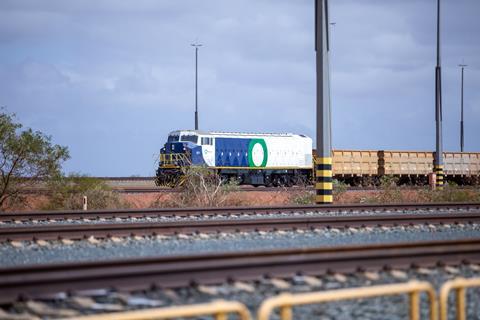
‘Real Zero is about transforming the way we power our assets, move our materials and run our operations, not offsetting emissions but eliminating them’, said Fortescue Metals & Operations CEO Dino Otranto on February 12. ’Decarbonising our rail network is a critical part of that task and the commissioning of these battery electric locomotives demonstrates that heavy haul rail can operate reliably without fossil fuels.
‘For a mining operation of this scale, decarbonisation only works if renewable energy is firm, reliable and available 24/7. That’s why we’re building an integrated system combining large-scale solar and wind generation, battery storage and transmission infrastructure.’